Global furniture buyers are entering 2026 with higher expectations for strength, appearance, and supply reliability. Iron Sofa Legs now influence more than a sofa’s visual style. They affect balance, floor protection, packaging, installation time, and long-term customer satisfaction.
“Small legs carry big responsibilities,” says Elena Voss, a furniture hardware specialist with more than fifteen years of sourcing experience. Her observation reflects a common purchasing mistake. Buyers often compare prices before checking metal thickness, weld quality, mounting plates, and tested load capacity. A polished black finish may look impressive under showroom lighting. However, uneven welds can appear after installation, and poor coating may scratch during shipping.
Good details matter.
For 2026 collections, global buyers should request clear technical drawings, material specifications, corrosion-resistance information, and packaging photographs. They should also confirm screw patterns and mounting-hole positions before approving samples. A sofa leg that fits one frame may fail on another. That sounds obvious, yet it still causes costly returns.
Sustainability deserves practical attention. Recyclable steel, reduced plastic packaging, and durable finishes can support responsible purchasing without sacrificing performance. Buyers should ask for credible documentation rather than broad environmental claims. Regional safety and product requirements also need review before shipment.
The best Iron Sofa Legs are not simply decorative accessories. They are structural components with a visible role. Still, no catalog can remove every risk. A small batch test, real-load inspection, and careful feedback from installers may reveal problems that product photographs hide.
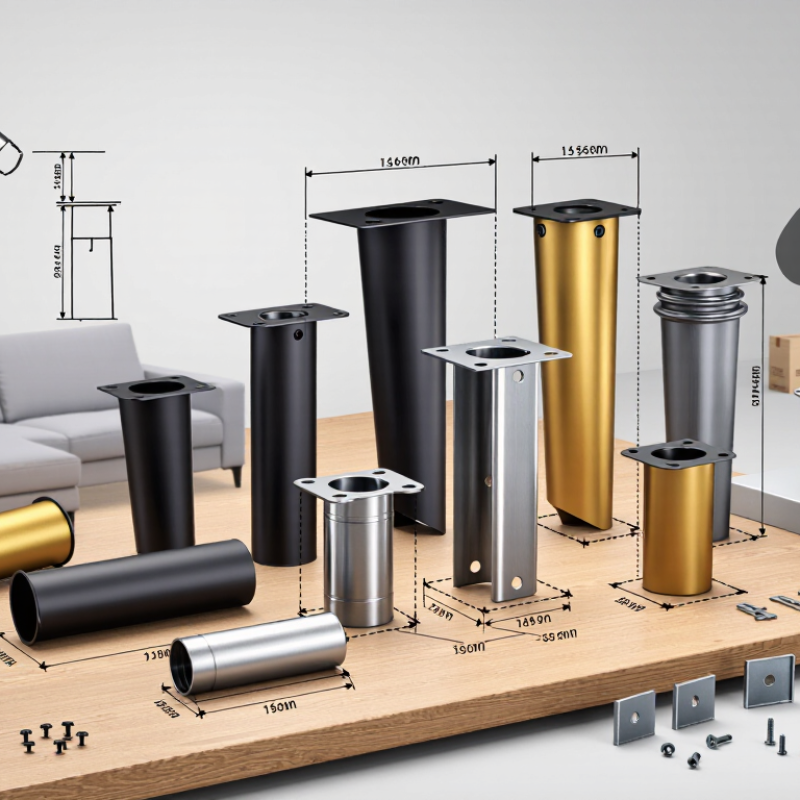
Iron sofa legs are steel or cast-iron supports fixed beneath a sofa frame. They carry weight, raise the seat, and influence the furniture’s visual character. In 2026, buyers are choosing them for durability, clean geometry, and easier floor cleaning. The industrial look remains popular, but slim matte-black legs also suit modern and Scandinavian interiors.
Market data supports this movement. Mordor Intelligence estimates the global furniture market at about USD 765.95 billion in 2025, with a projected 5.2% CAGR through 2030. Grand View Research also reports steady growth in metal furniture, supported by demand for durable residential products. These figures do not prove every sofa needs iron legs. They show a wider preference for long-use materials.
From my sourcing experience, thickness and welding quality matter more than appearance alone. A leg may look strong but flex under uneven loads. Check the steel gauge, mounting plate, screw position, and corrosion protection. Powder coating helps, though damaged edges can still rust in humid rooms. That detail is easy to miss. Buyers should also confirm load ratings and floor compatibility before ordering. Cheap legs can create costly repairs, and trendy shapes may reduce cleaning access.
In 2026, global furniture buyers are looking beyond price when choosing iron sofa legs. The critical factors are type, shape, finish, and size. Tapered legs create a lighter visual effect for compact sofas. Straight block legs provide a stronger, architectural appearance. Hairpin and U-shaped legs suit modern interiors, but their stability depends on steel thickness and mounting design. Round legs feel softer, while square legs support a more structured style.
Finish affects both appearance and service life. Powder coating offers a durable surface with many color options, including matte black, warm bronze, and muted gray. Electroplated finishes can create a brighter metal appearance, but surface preparation must be carefully controlled. In humid rooms, buyers should request salt-spray information and inspect welds, corners, and mounting plates. A beautiful finish cannot correct poor construction.
Size must match the sofa frame, cushion height, and intended floor clearance. Common leg heights range from 100 to 150 millimeters, while taller designs may change seating comfort noticeably. Measure the existing mounting points before ordering. Thread size, plate width, and hole spacing also matter. I have seen attractive legs fail because the screws were too short. That mistake is easy to prevent. Ask for load-test records, dimensional drawings, material details, and production samples. Even then, sample approval deserves a second look, because small changes in coating thickness can affect fit.
| Leg Type | Common Shape | Typical Material | Standard Height Range | Typical Profile / Tube Size | Common Finishes | Typical Installation | Recommended Sofa Style |
|---|---|---|---|---|---|---|---|
| Straight Tapered Leg | Square or rectangular taper | Powder-coated carbon steel or solid iron | 100–200 mm (4–8 in) | 25–40 mm square tube or 30–45 mm solid profile | Matte black, white, brass tone, clear coat | Top plate with 4–6 screw holes | Modern, Scandinavian, transitional |
| Splayed Leg | Angled outward, usually 10–15° | Steel tube or forged iron | 100–180 mm (4–7 in) | 20–35 mm round or square tube | Textured black, antique bronze, gunmetal | Angled mounting plate or threaded insert | Mid-century, contemporary, compact sofas |
| Hairpin Leg | Inverted V made from bent rod | Solid steel rod, commonly 10–13 mm diameter | 100–150 mm (4–6 in) | 10–13 mm round rod; 2 or 3 rods per leg | Black powder coat, raw steel, clear lacquer | Flat mounting plate, typically 2–4 screws | Light contemporary and retro furniture |
| U-Shaped Leg | Continuous U-frame or inverted U | Welded steel tube | 100–180 mm (4–7 in) | 20–40 mm square or rectangular tube | Matte black, satin nickel, white, bronze | Two-point or full-width mounting plate | Large sofas, benches, modular seating |
| Trapezoid Leg | Wider base with slanted sides | Welded carbon steel | 120–200 mm (5–8 in) | 25–50 mm rectangular tube | Black, dark grey, brushed metal effect | Reinforced top plate with multiple holes | Industrial, loft, heavy upholstered sofas |
| Conical or Round Leg | Round, tapered, or turned profile | Solid iron, steel bar, or metal casting | 80–180 mm (3–7 in) | 25–50 mm diameter | Polished chrome, antique brass, bronze, black | Threaded stud, screw plate, or concealed bolt | Classic, luxury, traditional furniture |
| Rectangular Frame Leg | Full rectangular side frame | Welded steel tube | 120–220 mm (5–9 in) | 20 × 40 mm to 30 × 60 mm tube | Powder-coated black, white, grey, metallic | Multiple screws along a mounting rail | Sectional, commercial, and high-load seating |
| Adjustable Leveling Leg | Threaded stem with foot or glide | Zinc-plated or powder-coated steel | 60–120 mm (2.5–5 in), plus adjustment | M8–M12 threaded stem; 30–50 mm foot | Zinc, black, stainless-steel effect | Threaded insert or mounting socket | Uneven floors, modular and functional sofas |
Buyer Reference Notes
Choosing iron sofa legs in 2026 starts with the frame, not the finish.
Measure the mounting holes, plate width, leg height, and thread size before ordering. A leg that looks perfect may still wobble. Check the sofa’s total load, including cushions and frequent movement. For heavier seating, thicker iron walls and broader mounting plates usually provide better stability. Ask for load-test information, not only product photographs. Details matter.
Strength also depends on how the legs meet the frame. Use reinforced inserts or suitable screws when the sofa base is soft wood. Tighten each fastener evenly, then test the sofa on a level floor. Rock it gently. Any flex needs investigation. Powder coating can resist everyday moisture, but damaged edges may rust near damp floors. Inspect welds for continuous, clean joints, and remove sharp burrs that could catch fabric or skin. These checks reflect practical installation experience, yet they are easy to skip when deadlines are tight.
Style should support the room without compromising compatibility.
Slanted legs create a lighter visual effect, while straight square legs suit structured upholstery. Match the finish to nearby metal, but do not assume identical colors under different lighting. Leave enough clearance for cleaning tools and floor transitions. Adjustable feet can help on uneven surfaces, although they may reduce the clean appearance. I would still recheck dimensions after upholstery changes. That step feels unnecessary. It sometimes prevents an expensive mismatch.
During inspection, look for continuous welds, rounded edges, stable feet, and coatings without pinholes.
Salt-spray results help assess corrosion resistance, but they cannot predict every indoor environment. Coastal air, damp floors, and cleaning chemicals can expose weak finishes quickly. Confirm static-load and repeated-cycle results. Ask whether testing covers the complete assembly, including screws, plates, inserts, and frame connections. The leg may be strong alone. The joint may fail first.
Installation details deserve equal attention. Match the plate pattern and thread size to the sofa frame. Use the specified screw length and tightening torque. Over-tightening can crush timber or strip an insert. Under-tightening can create movement and noise. Provide clear instructions and replacement hardware. I would also request a small pre-production sample. It can reveal misaligned holes or uneven feet before shipment. No inspection is perfect. Recheck after assembly and after a short period of use. That modest step is often missed.
2026 buyers should price iron sofa legs by landed cost, not factory quotation alone. Grand View Research valued the global furniture market at about USD 516.66 billion in 2022. Its report projects a 5.2% CAGR through 2030. That growth supports demand, but it does not guarantee stable steel prices. Material grade, tube thickness, welding time, coating, packaging, freight, and duties all matter. A 0.3-millimeter thickness change can affect strength and perceived quality.
For sourcing, request samples, dimensional drawings, coating specifications, and load-test methods. Ask for prices at 100, 500, and 2,000 sets. The comparison becomes clearer. World Steel Association reported approximately 1.89 billion tonnes of crude steel production in 2023. Steel availability is broad, yet regional energy and transport costs can change quotations quickly. I would keep a 30-day validity period, though even that may prove optimistic. Custom options include height, mounting-plate holes, matte finishes, adjustable feet, and recycled steel content. Customization works only when tolerances are written down.
Supplier evaluation needs evidence, not polished photographs. Check capacity, inspection records, corrective-action history, and export packaging. ISO 9001 certification can indicate process discipline, but it cannot replace independent testing. Request recent batch inspections, salt-spray results, and videos of welding controls. The United Nations Comtrade database shows how widely metal furniture moves across borders, making traceability increasingly important. My caution is simple: the cheapest leg can become expensive after returns, scratches, or uneven installation.
Check steel grade, wall thickness, weld quality, dimensions, and mounting design. A certificate alone is not enough.
Request static-load and repeated-cycle results. Testing should cover the complete assembly, including screws, plates, inserts, and frame connections.
Look for continuous welds, rounded edges, stable feet, and coatings without pinholes. Small defects can worsen in damp rooms.
No. Coastal air, wet floors, and cleaning chemicals create different conditions. Salt-spray results are useful, but limited.
Match the mounting holes and thread size to the sofa frame. Use the specified screw length and tightening force.
Over-tightening may crush timber or damage inserts. Under-tightening can cause movement and noise. Both problems are avoidable.
Compare landed cost, not factory price alone. Include material, coating, packaging, freight, duties, and possible returns.
Request a physical sample, dimensional drawing, coating details, load-test method, inspection records, and replacement hardware. Small samples matter.
Record height, hole spacing, finish, adjustable feet, and recycled material content. Vague specifications can create uneven legs.
Review production capacity, batch inspections, corrective actions, welding controls, and export packaging. Photographs can hide weaknesses.
The 2026 market for Iron Sofa Legs is being shaped by demand for durable, stylish, and adaptable furniture components. Buyers can choose from tapered, straight, angled, square, round, or geometric designs, with finishes such as matte black, brushed metal, antique tones, and custom colors. Available heights and mounting styles should match the sofa’s frame, seat height, weight distribution, and overall design concept. Selecting the right legs requires balancing structural strength, corrosion resistance, visual appeal, and compatibility with different furniture materials.
Global buyers should also review product quality, load-bearing performance, surface treatment, packaging, and installation requirements before placing an order. Reliable sourcing involves comparing material specifications, production consistency, customization capabilities, lead times, minimum order quantities, and total landed costs rather than focusing only on unit price. Clear technical drawings, sample approval, inspection procedures, and practical after-sales communication can reduce sourcing risks and support long-term cooperation.

Daxinghong Hardware