2026 Top Stainless Steel Sofa Legs Which Type Is Best?

Time:2026-10-19 Author:Aria
0%

Choosing the right sofa leg can change more than appearance. It affects stability, seating height, floor protection, and everyday comfort. In 2026, Stainless Steel Sofa Legs remain popular because they combine clean lines with strong corrosion resistance. Yet “stainless steel” does not describe one identical product. Grade, wall thickness, welding quality, and mounting hardware all matter.

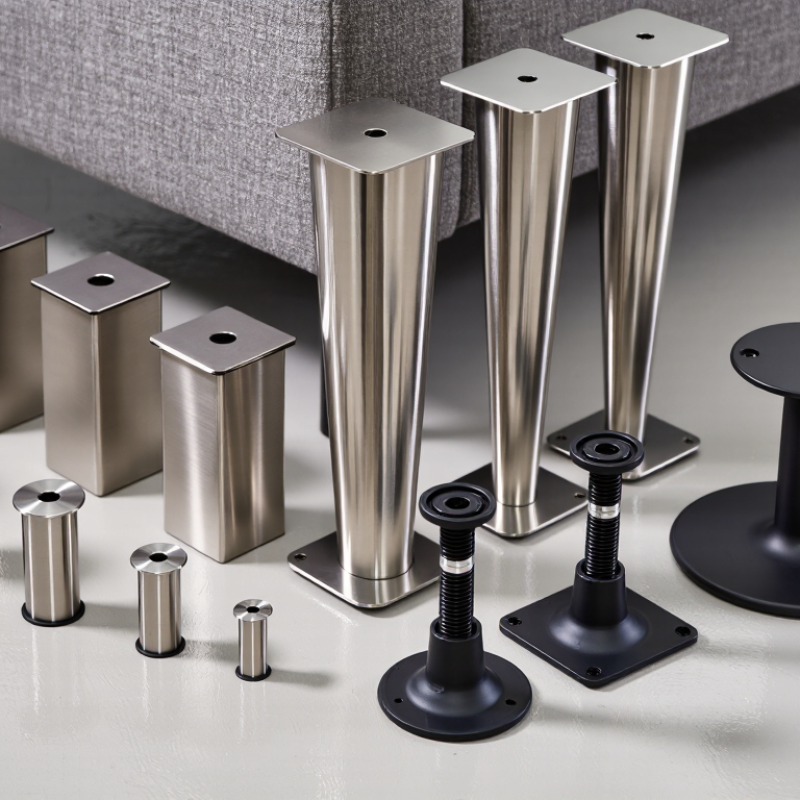
This guide compares the main types, including straight round legs, square legs, tapered designs, adjustable legs, and low-profile supports. Round legs can create a softer visual effect beneath modern sofas. Square legs often suit sharp, architectural furniture. Adjustable models help correct uneven floors, although their mechanisms may loosen if poorly designed. A polished finish reflects light strongly, while brushed steel hides fingerprints and small scratches more effectively.

Reliable selection starts with measurable details. Check the manufacturer’s load rating, base diameter, screw size, mounting plate, and tested height. A four-leg sofa may distribute weight differently from a sectional with a center support. The floor also matters. Rubber pads can reduce movement on tile or wood, but they are not a substitute for correct installation. Small details matter.

There is no universal “best” type. A 304 stainless steel leg may suit most indoor rooms, while damp environments may require stronger corrosion protection. Some product listings provide impressive photos but limited testing information. That deserves caution. This article uses practical furniture-making considerations, supplier specifications, and installation experience to compare each option honestly. The ideal choice balances strength, style, maintenance, and cost—not appearance alone. Mistakes are possible, especially when furniture dimensions are measured carelessly.
2026 Top Stainless Steel Sofa Legs Which Type Is Best?

Stainless Steel Sofa-Leg Types: Straight, Tapered, Hairpin, Sled, and Adjustable

2026 Top Stainless Steel Sofa Legs: Which Type Is Best?

Choosing stainless steel sofa legs depends on load, floor conditions, cleaning habits, and the sofa frame. The International Stainless Steel Forum reported about 58.4 million tonnes of stainless steel production in 2023. That scale supports stainless steel’s availability, but it does not make every leg design equally reliable. Straight legs offer the simplest load path and suit heavy, box-shaped sofas. Tapered legs reduce visual weight and improve modern proportions. Their smaller lower section needs careful wall thickness and accurate welding.

Hairpin legs create an open, lightweight appearance. However, narrow rods can feel less stable on uneven floors, especially with deep seating. Sled legs spread contact across a wider base and can reduce point pressure on timber or tile. They may still collect dust beneath the frame. Adjustable legs are practical where floors slope or sofa modules must align. A quality adjustment thread should resist loosening during repeated use. Small details matter.

FIRA furniture testing guidance emphasizes checking stability, strength, and durability rather than judging appearance alone. In practice, I inspect weld continuity, mounting-plate thickness, thread engagement, and rubber floor protection. ASTM A240 material specifications can help verify stainless steel grades, but grade alone cannot predict sofa performance. A polished surface looks impressive. It also shows fingerprints quickly. For dry indoor rooms, straight or tapered legs are often sensible; for uneven floors, adjustable legs deserve closer consideration. Hairpin and sled styles remain design-led choices, and that is sometimes the honest answer.

304 vs 316 Stainless Steel: ~18% Cr, ~8% Ni, and 2–3% Mo

For 2026 stainless steel sofa legs, 304 and 316 remain the practical choices. ASTM A240/A240M data lists 304 with about 18–20% chromium and 8–10.5% nickel. It generally contains no intentional molybdenum. This grade suits dry living rooms, offices, and protected indoor furniture.

316 typically contains 16–18% chromium, 10–14% nickel, and 2–3% molybdenum. The Nickel Institute explains that molybdenum improves resistance to chloride-related pitting and crevice corrosion. That matters near salty air, damp floors, kitchens, and frequent cleaning. The International Stainless Steel Forum reported global stainless production of about 58.4 million tonnes in 2023, showing the material’s broad industrial relevance. Yet alloy choice alone cannot guarantee durability. Poor weld cleaning, sharp crevices, and trapped moisture may still create stains. I have seen polished legs fail early because water collected beneath the mounting plate.

Tips: Choose 304 for normal indoor use and 316 for coastal or humid settings. Check the mill certificate, not only the surface shine. Request ASTM A240 compliance and confirm the actual grade. Also inspect wall thickness, weld quality, foot design, and fastener compatibility. A stronger alloy cannot correct an undersized leg or weak fixing. One detail is easy to miss. Cleaners containing chlorides can damage even 316 when residue remains on the surface.

Load and Safety: Check EN 12520 or BIFMA X5.4 Seating Requirements

Choosing stainless steel sofa legs in 2026 requires more than checking appearance and advertised load ratings. The complete sofa must meet relevant seating safety requirements, including EN 12520 or BIFMA X5.4. These standards assess stability, strength, durability, and attachment performance. The leg itself is only one part of the tested structure.

During evaluation, place the legs on the actual sofa frame, not on a separate metal sample. Apply repeated loads to the seat and backrest. Inspect welds, mounting plates, screws, and floor contact points after testing. A wide mounting plate can reduce frame stress. A rigid leg can still fail when thin wood splits around its fasteners. Small details matter.

Use the current standard edition and select the test category carefully. EN 12520 generally supports domestic seating assessments, while BIFMA X5.4 is commonly used for lounge seating in commercial environments. Requirements may differ by product construction and intended use. Never treat a laboratory load figure as a universal promise.

A practical check includes uneven-floor testing, side pressure, and repeated sitting cycles. Watch for wobbling, loose hardware, sharp edges, and permanent bending. Grade selection also deserves attention, especially in humid rooms or near cleaning chemicals. Stainless steel can resist corrosion, but surface finish and weld quality still influence service life.

One assumption often fails: heavier legs do not automatically create safer sofas. Frame design, fastener engagement, and load distribution remain critical. Testing can expose weaknesses that a visual inspection misses. That is where careful review becomes necessary.

2026 Top Stainless Steel Sofa Legs: Which Type Is Best? — Load and Safety Guide
Stainless Steel Leg Type Typical Construction Common Height Range Typical Sofa Use Structural Advantages Potential Limitations EN 12520 / BIFMA X5.4 Suitability Recommended Safety Checks
Straight Tapered Leg Machined or formed stainless steel with a gradually reduced profile toward the floor. 80–150 mm Standard sofas, compact lounge seating and contemporary furniture. Simple load path, low visual bulk and easy replacement. A wider upper mounting area can reduce local stress in the sofa frame. A narrow lower section may increase bending risk if the leg is too tall or poorly braced. Check vertical load, front-to-back load, sideways load, joint loosening and permanent deformation. Verify floor contact after testing.
Cylindrical Round Leg Solid stainless steel or tubular round section with a circular foot. 60–120 mm Minimalist sofas, modular seating and furniture requiring a small visual footprint. Uniform resistance to bending from different horizontal directions and relatively easy to manufacture. A small foot can create high contact pressure on soft flooring. Hollow tubing requires suitable wall thickness and end closure. Inspect welds or threaded joints, measure movement after cyclic loading and use a non-marking foot or suitable floor protector where required.
Square or Rectangular Leg Folded, extruded or machined stainless steel with a square or rectangular cross-section. 80–160 mm Modern sofas, heavier frames and designs needing a visually substantial base. Broad mounting faces can improve connection stability. Flat sides can resist rotation when correctly oriented. Sharp corners need safe finishing. Stress concentration may occur at bends, welded corners or abrupt section changes. Check corner radii, weld penetration, screw pull-out, torsional movement and local crushing of the sofa frame.
Splayed Angled Leg One-piece or two-piece stainless steel leg installed at an outward angle. 100–180 mm Mid-century, elevated and visually lightweight sofa designs. Can provide a wider support footprint and improved resistance to tipping when the angle and placement are properly engineered. Angled geometry introduces additional horizontal forces into the mounting area. Incorrect positioning can reduce stability. Suitable only after stability, strength and connection testing confirms that the angled installation does not overload the frame. Assess tipping resistance, horizontal forces, mounting-plate rotation and fastener loosening under repeated loading.
U-Shaped or Skid Leg Bent stainless steel tube or bar forming two or more floor contact points. 100–180 mm Long sofas, benches and commercial lounge seating. Distributes load across multiple contact points and can reduce the number of separate leg attachments. Uneven floors may leave one contact point unloaded. Bends and welded joints require careful fatigue and deformation control. Check welds, tube buckling, skid alignment, floor contact, racking resistance and durability under repeated use.
Central Pedestal Leg Round or square stainless steel column with a reinforced mounting plate and broad base. 100–180 mm Compact sofas, swivel modules and seating with a central support point. Provides unobstructed clearance around the sofa and can support rotation when a suitable swivel mechanism is used. Concentrates load in one area and may have a higher tipping moment. The base must resist rocking and overturning. Use only with a properly engineered base and verified stability. Compliance cannot be inferred from the leg material alone. Test tipping in several directions, column bending, base-plate deformation, fastener pull-out and any swivel-lock mechanism.
Adjustable Leveling Leg Threaded stainless steel stem with a height-adjustable foot, often combined with a mounting socket or plate. 30–100 mm adjustment range Modular sofas and installations on slightly uneven floors. Allows leveling and can improve stability when all feet are correctly adjusted and locked. Excessive extension reduces stiffness. Threads, locknuts and sockets can loosen during repeated use if not secured. Suitable when the adjusted position is controlled and the complete assembly is tested at its maximum permitted extension. Check thread engagement, locknut security, lateral play, maximum extension and resistance to repeated adjustment.
Decorative Hollow Tube Leg Thin-wall stainless steel tube selected primarily for appearance. 80–150 mm Light-duty residential sofas where appearance is the main design priority. Low weight, clean appearance and efficient material use when the tube is properly engineered. Thin walls can dent, buckle or deform at the mounting area. Decorative appearance does not indicate seating safety. Check local buckling, tube wall damage, mounting reinforcement, weld quality and permanent set after loading.
Low-Wide Reinforced Leg Short stainless steel block, plate or welded box section with a broad mounting footprint. 40–90 mm Low-profile sofas, deep seating and designs requiring a lower seat height. Short height reduces bending leverage. A broad connection can distribute force into the sofa frame. Low clearance may make cleaning difficult. Poorly positioned legs can reduce stability at the sofa corners. Check corner loading, racking, floor contact, frame crushing and clearance from upholstery or moving parts.

Important: EN 12520 and BIFMA X5.4 evaluate seating safety, strength, stability and durability through specified test procedures; they do not approve a stainless steel grade or leg style by itself. The final result depends on the complete sofa assembly, including the frame, leg geometry, mounting hardware, fasteners, upholstery structure and floor interface. Select the applicable edition and test level for the intended domestic, commercial or public-use application, and obtain laboratory verification before claiming compliance.

Leg Height and Form: Compare 100–200 mm Straight, Tapered, and Hairpin Legs

Choosing the best stainless steel sofa legs in 2026 starts with height and form. The 100–200 mm range changes seating posture, visual weight, and cleaning access. World Stainless Association statistics reported 62.2 million tonnes of stainless steel production in 2024. This scale supports continued material availability, but it does not make every leg suitable.

Straight legs offer the clearest, most stable appearance. At 100–120 mm, they suit low sofas and reduce visual lift. At 150–200 mm, they create stronger floor clearance for robotic vacuums. Tapered legs look lighter than straight legs. Their wider upper section can distribute load more effectively, especially beneath deep cushions. Hairpin legs add a flexible, open profile. However, thin rods can feel less stable on uneven floors. Check weld quality, rod diameter, and the mounting plate. Small details matter.

A 150 mm leg is often a practical middle choice. It balances sitting height and cleaning space. Still, cushion compression can lower the final seat height by 20–40 mm. Measure the complete sofa, not the frame alone. ISO 7173 durability guidance evaluates seating-unit performance, yet it does not select one universal leg shape. A prototype test remains necessary. I would not call hairpin legs the weakest option automatically. Proper bracing can outperform a poorly mounted straight leg. Use corrosion-resistant stainless steel for humid rooms, and consider a higher-alloy grade near salt air. The attractive option is not always the reliable one.

Finish and Corrosion: Interpret ISO 9227 Salt-Spray Test Results for 2026 Choices

2026 Top Stainless Steel Sofa Legs: Which Type Is Best?

For sofa legs, ISO 9227:2022 should support comparison, not marketing promises. The standard covers neutral salt spray, acetic acid salt spray, and copper-accelerated testing. It does not set one universal pass time or predict outdoor service life. A report showing 1,000 hours is incomplete without the test method, surface finish, specimen preparation, and failure definition.

Look closely at the finish. A smooth, polished surface usually retains fewer contaminants than a rough brushed surface. However, polishing direction, weld discoloration, and trapped moisture still matter. Ask whether the report records red rust, pitting, blistering, or only cosmetic staining. These failures are different. They need different acceptance limits. Grade 316 stainless steel can offer stronger chloride resistance than 304 because of molybdenum, but geometry and cleaning habits can defeat that advantage.

I would not treat salt-spray hours as years. That shortcut is tempting, and wrong. NACE’s IMPACT Study estimated global corrosion costs at about 3.4% of worldwide GDP, showing why specification discipline matters. For 2026 purchasing decisions, request the complete ISO 9227 report, including exposure duration and photographs. Check weld areas and hidden mounting faces. A perfect panel result may not represent a sofa leg assembled with moisture-holding joints. Refine the choice after reviewing the actual environment, especially coastal air, salt tracked indoors, and frequent cleaning.

FAQS

Which stainless steel sofa leg type suits a heavy, box-shaped sofa?

Straight legs usually provide the simplest load path. Choose thick mounting plates and continuous welds.

Are tapered sofa legs only a style choice?

No. They reduce visual weight and suit modern sofas. Their narrow lower section needs careful wall thickness and accurate welding.

What should I know before choosing hairpin sofa legs?

Hairpin legs create an open, lightweight look. Narrow rods may feel less stable on uneven floors.

When are sled-style sofa legs useful?

Sled legs spread contact across a wider base. They can reduce point pressure on timber or tile floors.

Why might sled legs need extra cleaning?

Their wider structure can collect dust beneath the sofa frame. A low, angled vacuum head helps.

When should I consider adjustable sofa legs?

Choose adjustable legs for sloped floors or modular sofas. The adjustment thread should resist loosening during repeated use.

Does stainless steel grade guarantee reliable sofa legs?

No. Grade matters, but weld quality, geometry, thread engagement, and floor protection also affect performance.

What details should I inspect before buying sofa legs?

Check weld continuity, mounting-plate thickness, thread engagement, and rubber protection. Small details matter.

What does a salt-spray test actually prove?

It compares corrosion resistance under defined conditions. It does not convert directly into years of indoor service.

Should I trust a test report showing many exposure hours?

Not by itself. Review the test method, finish, specimen preparation, failure definition, and photographs.

Which finish is easier to keep clean?

A smooth polished surface usually holds fewer contaminants than a rough brushed finish. It also shows fingerprints quickly.

Is a coastal home different from a dry indoor room?

Yes. Coastal air, tracked-in salt, and frequent cleaning increase corrosion concerns. Inspect welds and hidden mounting faces more carefully.

Is 316 stainless steel always better than 304?

It can resist chloride exposure more strongly. Still, poor geometry or trapped moisture can defeat that advantage.

Which sofa leg style is the safest overall choice?

There is no universal winner. Straight legs suit heavy sofas, while adjustable legs suit uneven floors.

Can appearance alone prove sofa-leg quality?

No. A polished surface may look excellent while hidden joints hold moisture. I sometimes judge appearance too quickly.

Conclusion

Choosing the best Stainless Steel Sofa Legs in 2026 depends on the sofa’s design, load requirements, installation conditions, and desired finish. Straight, tapered, hairpin, sled, and adjustable styles offer different visual effects and levels of support. Legs between 100 and 200 mm can alter seat height and proportions, while adjustable versions help compensate for uneven floors. For material selection, 304 stainless steel contains approximately 18% chromium and 8% nickel, making it suitable for most indoor applications. 316 stainless steel adds about 2–3% molybdenum, improving resistance in humid, coastal, or more corrosive environments.

Safety should be evaluated through recognized seating requirements such as EN 12520 or BIFMA X5.4, with attention to load capacity, fastening strength, stability, and repeated-use performance. Finish quality is also important: ISO 9227 salt-spray test results can help compare corrosion resistance, but test duration and evaluation methods should be reviewed carefully. Ultimately, the best choice balances structural reliability, corrosion protection, height, style, and compatibility with the sofa frame.


Aria

Aria

Aria is a dedicated marketing professional with a deep passion for innovative strategies and a keen understanding of our company's product offerings. With a wealth of experience in the industry, Aria excels at crafting engaging content that highlights the unique features and benefits of our......