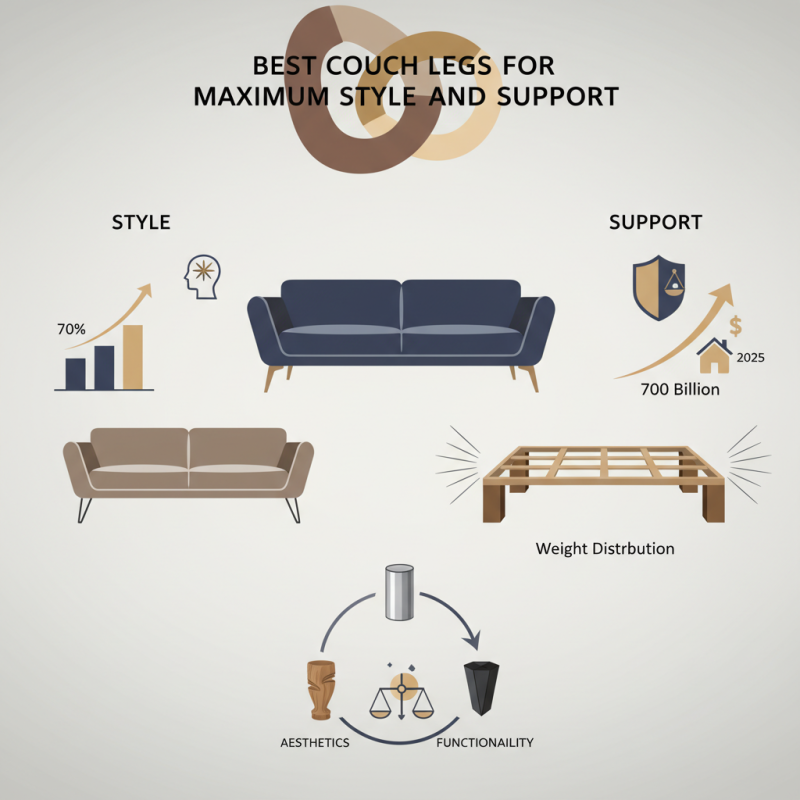
In the world of interior design, couch legs play a crucial role in both style and support. Statistics show that 70% of furniture buyers prioritize aesthetics when choosing a couch. The right couch legs can enhance the overall look of a living space. Stylish legs can elevate a basic sofa, turning it into a statement piece. On the other hand, strong and sturdy legs ensure that sofas remain functional and safe.
The furniture industry is projected to reach a value of $700 billion by 2025. This growth reflects a rising trend in home decor awareness, where consumers seek quality and design. Many overlook the importance of couch legs, yet they significantly affect a couch’s durability. Research suggests that well-designed legs contribute to better weight distribution. This results in longer-lasting furniture.
Choosing the right couch legs can be a challenge. Options abound, from wood to metal, each providing unique benefits. Yet, the ideal choice often comes down to personal style and practical needs. It is essential to balance aesthetics with functionality. The right legs not only support the couch but also support your overall interior style.
Couch legs are often overlooked in interior design, yet they play a crucial role in aesthetics and functionality. According to a report from the Furniture Research Institute, furniture stability impacts user safety. About 30% of furniture-related accidents are attributed to insufficient support and weak legs. Choosing well-designed couch legs can significantly enhance stability and visual appeal.
Material selection for couch legs is equally important. Research shows that wooden legs, for instance, are popular for their sturdy nature and timeless aesthetic. Metal legs offer a modern twist, delivering both strength and sleek lines. However, they may not provide the warmth of natural wood. The choice depends on the overall theme of the space and the expected foot traffic.
Design trends show that mid-century modern styles are making a strong comeback. These styles often feature tapered legs that elevate the design while enhancing the room's flow. However, not every space can accommodate such styles. Larger, industrial designs may benefit more from robust, chunky legs. This contrast can highlight the unique attributes of different styles, making a bold statement. Balancing support and style is key.
Choosing the right couch legs can enhance both style and support. Different materials offer unique aesthetics and functionalities.
Wooden legs provide durability and a classic look. They can add warmth to a space, but may not suit every design scheme.
Metal legs, conversely, lend a modern touch. They often provide strong support but may feel cold or industrial.
Styles are equally varied. Sleek, tapered legs can create a more sophisticated appearance. They help a couch feel less heavy, visually lightening the space.
On the other hand, chunky legs offer stability but may dominate the design. Balancing the leg style with your overall decor is essential.
Functionality matters too. Higher legs allow for easier cleaning underneath. This can save time and effort in maintenance.
Lower legs might provide a cozy feel but can trap dust. Reflect on your lifestyle and preferences. This can guide your choice of
couch legs, ensuring they meet both style and practical needs.
Choosing the right couch legs is crucial for optimal support and stability. According to industry reports, the right leg design can enhance both the aesthetic appeal and structural integrity of your furniture. For instance, wooden legs often provide better stability compared to plastic ones. A report from the Furniture and Home Furnishings Association notes that nearly 35% of consumers prioritize durability when selecting furniture leg styles.
When considering couch legs, think about the height and material. Shorter legs can ground your couch, making it feel stable. Meanwhile, metal legs can support heavier weights but may lack the warmth of wood. Always assess the weight capacity of the legs. Some legs can only hold up to 200 pounds, which may not be sufficient for larger styles.
Tip: Look for legs that are easy to replace. This way, if they wear out or you change styles, you can switch them without replacing the entire couch.
Also, evaluate the leg design for a blend of function and flair. A leg that is both stylish and sturdy can elevate your room’s design. Sometimes, the most attractive designs may sacrifice stability. Aim for a balance to ensure both beauty and strength in your selection.
When it comes to couch legs, choosing between DIY and store-bought options can be challenging. Store-bought legs provide convenience and a wide variety of styles. They are easy to install and guarantee durability. However, they can also be pricier and may not fit your unique style perfectly.
On the other hand, DIY couch legs allow for customization. You have control over the design, materials, and finish. This can result in a personalized touch that reflects your aesthetic. Yet, making your own legs often requires tools and skills, which can be a barrier. You also risk compromising stability if not made properly.
**Tips:** Measure your couch height carefully before purchasing or creating legs. Consider the weight the legs will support. Use sturdy materials for DIY projects to ensure longevity. It’s crucial to test stability before fully relying on DIY legs. Think about your decor style. It’s easy to get carried away, but simpler designs often complement more spaces effectively.
Couch legs play a crucial role in both style and support. Over time, they can wear out or become damaged, affecting the stability of your sofa. Regularly checking the condition of couch legs is essential for maintaining your furniture's integrity. Look for cracks or loose fittings. A wobbly couch can be frustrating, as it diminishes comfort and safety.
Replacing couch legs is often simpler than you might think. When choosing new legs, consider the height and material. Wood offers a classic touch, while metal adds modern flair. Installing new legs can transform the look of your couch, giving it a fresh vibe. Remember to check for the right size, ensuring stability when you sit down.
Keep in mind that not all replacements are perfect. Sometimes, new legs may not match the existing decor. Choosing leg styles that resonate with your home can be a challenge. It’s wise to measure and visualize before making a purchase. Your choices will impact the longevity and aesthetics of your couch. Regular maintenance and thoughtful replacements can enhance both comfort and style, creating a cozy space for years to come.
The chart above illustrates the support ratings for various types of couch legs, showcasing their style and support capabilities. Wooden legs provide the highest support, followed closely by metal. Adjustable legs offer versatility, making them a popular choice for maximizing style.
: Couch legs impact both aesthetics and functionality. They enhance stability and contribute to the visual appeal of furniture.
Wooden legs are durable and classic, while metal legs offer a modern look with strong support. Choices vary based on style.
Sleek, tapered legs can lighten a couch's appearance. Chunky legs provide stability but may overwhelm the design.
Higher legs allow for easier cleaning underneath the couch. They also create a more open feel in a room.
DIYing legs offers customization but requires tools and skills. Improper construction can lead to stability issues.
Store-bought legs provide convenience. DIY legs allow for personalization but require careful planning and execution for safety.
Yes, mid-century modern styles favor tapered legs, while industrial themes may require chunkier designs. Balance style and support.
Measure your couch height and consider the weight the legs will support for proper fit and stability.
Your lifestyle and preferences affect practical needs. Consider maintenance and cleaning ease to ensure the best choice.
It can be tricky. While unique designs can be appealing, simpler styles often blend better with various decor themes.
Couch legs are an essential element in interior design, contributing not only to the overall aesthetic but also to the stability and support of the furniture. Understanding the various types of couch legs—ranging from materials like wood and metal to diverse styles—allows homeowners to select options that align with their decorative themes while ensuring functionality.
When choosing couch legs, it's vital to consider factors like optimal support and stability to maintain the integrity of the couch over time. There are pros and cons to both DIY options and store-bought legs, with each choice impacting the style and longevity of the furniture. Regular maintenance and timely replacement of couch legs can enhance both the appearance and durability of your couch, ensuring it remains a stylish centerpiece in your living space.
Daxinghong Hardware