Dining Chairs With Gold Legs can make a dining room feel polished, but the finish is only part of the decision. Seat height, frame stability, upholstery, and floor protection matter every day. A chair may look elegant beneath warm pendant lights, yet feel uncomfortable after a long meal. Small details count.
Grand View Research’s Furniture Market Size, Share & Trends Analysis Report examines the sector across product types, materials, and distribution channels. It offers useful market context, but it does not determine whether a particular chair suits your table or household. Measurements and hands-on checks still matter. Before buying, compare seat height with your table, inspect the leg joints, and look for protective glides that will not scratch hardwood.
Designer Charles Eames famously said, “The details are not the details. They make the design.” His observation is not specifically about gold-legged dining chairs, but it fits the practical choices behind them: brushed or polished metal, rounded or tapered legs, and fabrics that are easy to clean. One caveat: gold finishes can vary noticeably between product photos and real rooms. Check a finish sample when possible, and read care instructions before choosing.
This guide explains how to choose Dining Chairs With Gold Legs by balancing comfort, construction, finish, and room style. It also leaves room for personal judgment. A beautiful chair is not automatically the right chair.
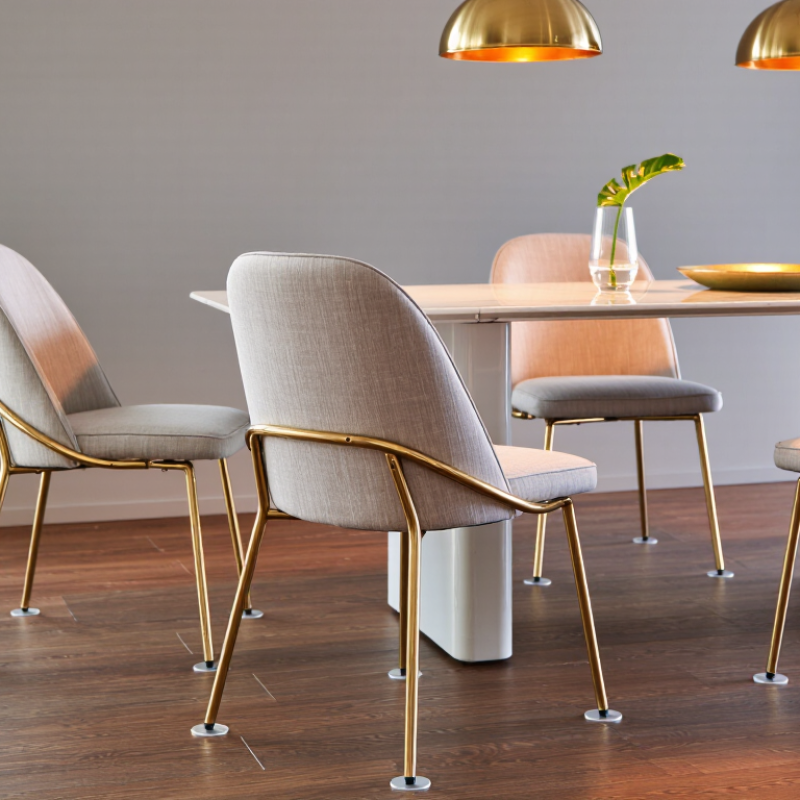
“Gold” can describe several different finishes, and the distinction matters in daily use. Brass has a warm, naturally varied tone that may deepen over time. Gold-colored plating usually gives metal legs a more uniform shine, while powder-coated finishes tend to look softer and more muted. Check the product details rather than relying on photos; lighting can make a satin finish appear almost glossy.
The leg’s base material affects stability as much as appearance. Steel is strong and commonly used for slender frames, while aluminum is lighter and may feel less substantial under a heavy chair. Look closely at the joints, welds, and floor glides. A chair dragged across tile can scratch both its finish and your floor. Felt pads help, though they need replacing.
For a lived-in dining room, a brushed or satin finish often hides fingerprints better than a mirror-like one. Still, “low maintenance” is not the same as maintenance-free. Wipe spills promptly with a soft, damp cloth, and avoid abrasive cleaners that can dull the surface. I once assumed every gold finish would age alike; it won’t. Ask how the coating is applied, and consider whether small changes in color would bother you over time.
A dining chair’s shape should feel comfortable in the room, not just look attractive beside a table. In a narrow dining area, slim seats with open backs can preserve sightlines and leave more visual space around the table. Rounded backs soften a room with sharp corners, while squared silhouettes often suit clean, simple interiors. Check the chair’s width against the space between table legs. A chair that looks compact in a photograph may feel bulky when several sit together.
Upholstery changes both comfort and the mood of gold-legged chairs. Textured fabric can make polished metal feel warmer, while smooth, pale upholstery creates a lighter, more formal look. For everyday meals, consider a fabric that is easy to wipe or clean, especially if children or frequent guests use the room. Sit in the chair for a few minutes if possible. Notice whether the seat edge presses against your legs and whether the back supports you. Small details matter. I once underestimated how quickly a pale seat showed crumbs; the color still looked lovely, but it needed more care than expected.
Tips: Bring a fabric sample home and view it beside your table in daylight and evening light. Leave enough room to pull each chair out without bumping a wall or neighboring seat.
Gold-legged dining chairs work best when their finish has a clear relationship to the room, not when every metal matches exactly. Compare the legs with your table’s hardware, pendant, or cabinet pulls in daylight. A warm brass tone can soften a dark walnut table; a cooler, paler gold may sit more comfortably beside ash or white oak. If the table has no metal details, let the light fixture provide the reference point. Keep one finish dominant, then allow small differences in sheen. Perfect matching can look oddly staged.
Scale matters, too. A slim gold frame can echo a delicate pendant, while broad, shiny legs may compete with a large chandelier. Houzz’s 2024 U.S. Houzz & Home Study reported a median renovation spend of $24,000 in 2023, up 19% from 2022. That figure covers home renovations broadly, not dining rooms specifically, but it underscores why lasting choices deserve care. Gold can show fingerprints and scratches more than expected. Ask for a finish sample, and view it beside your tabletop and lighting before ordering.
Bring décor into the mix with restraint. A brass picture frame, warm-toned bowl, or fine gold detail in a rug can repeat the chair finish without creating a matching set. Keep nearby colors simple: cream, deep green, charcoal, and natural wood often let gold read as an accent. I would not force gold into a room that already feels visually busy. A small mismatch in metal tones may feel more natural than a room polished to perfection.
A dining chair can look elegant in a showroom and feel tiring after one meal. Sit in it for several minutes before buying, if possible. Check that your feet rest flat and your knees have room beneath the table. A supportive seat should feel stable, not overly soft. If the chair has arms, make sure they slide under your table without catching.
Gold legs vary in finish and construction. Look closely at the joints, welds, and points where the legs meet the seat. They should feel firm when you gently press or shift your weight. Metal legs can resist everyday knocks, but thin tubing or loose fittings may wobble over time. Ask how the finish should be cleaned. A soft, slightly damp cloth is usually safer than abrasive pads, which can dull or scratch a coated surface. Small marks happen.
Think about your household’s routines, too. Chairs used by children or frequent guests may need wipeable upholstery and a finish that does not show every fingerprint. Fabric swatches can look different in home lighting, so test one near your dining area when available. I have sometimes chosen a chair for its appearance, then regretted the hard seat. Comfort is easy to underestimate. Check the stated weight guidance and care instructions, and inspect the chair again after delivery for uneven legs or loose hardware.
How to Choose Dining Chairs With Gold Legs
Compare seat materials for comfort, durability, and ease of cleaning before you buy. Scores are practical guide ratings from 1 (low) to 5 (high), not laboratory test results. Gold-leg finishes also vary: check the manufacturer’s care instructions and avoid abrasive cleaners to help prevent scratches or tarnishing.
Measure the dining area before comparing chairs with gold legs. A chair may look slim online but feel bulky around a real table. Leave about 36 inches between the table edge and nearby walls or furniture when possible. This gives people room to pull out chairs and walk behind them. In tighter rooms, test the layout with tape on the floor. It is not elegant, but it can prevent an awkward purchase.
Check the chair’s seat height against the table, not just its overall height. A difference of roughly 10 to 12 inches between the seat and tabletop often feels comfortable, though cushions and personal preference matter. Measure the space beneath the table apron, too. Gold legs can catch the eye, but their shape affects where chairs fit and how easily they slide in. Compare leg width, seat depth, back height, and the distance between front legs. A quick paper sketch helps. I still find that measurements miss one thing: how crowded a room feels once people sit down.
Tips: Mark each chair’s footprint on the floor. Compare two or three options side by side, including their weight and upholstery care. Check the finish in your room’s lighting; warm gold can look brighter beside a sunny window.
No. Brass has a warm, varied tone that can deepen over time. Plating looks more uniform, while powder coating is usually softer. Check a sample in daylight; photos can mislead.
Steel is strong and suits slender frames. Aluminum is lighter and may feel less substantial under a heavy chair. Inspect the joints, welds, and floor glides.
Use felt pads and replace them when worn. Lift chairs across tile when possible; dragging can mark both the floor and the finish.
Brushed or satin finishes tend to show fewer fingerprints than mirror-like ones. They still need care. Wipe spills with a soft, damp cloth and avoid abrasive cleaners.
Slim seats and open backs can preserve sightlines. Check each chair’s width against the table legs, and leave room to pull chairs out. Photos can make bulky chairs look smaller.
Easy-clean fabric can be practical for frequent use. Textured fabric warms up polished metal, while pale upholstery feels lighter but may show crumbs quickly.
Use the table hardware or light fixture as a reference. Keep one metal finish dominant, but small differences in sheen can feel more natural than exact matching.
Cream, deep green, charcoal, and natural wood can let gold stand out. A brass frame or warm-toned bowl is enough; too many metallic accents may crowd the room.
Not alone. Ask for a finish or fabric sample and view it beside your table in daylight and evening light. Lighting changes how colors and sheen appear.
Choosing Dining Chairs With Gold Legs begins with understanding how different materials and finishes affect appearance, durability, and upkeep. Consider whether the gold tone is warm or cool and whether a polished, brushed, or muted finish best suits your room. Then select a chair shape and upholstery that complement your dining space, provide the comfort you need, and work well with the table’s style and proportions.
For a cohesive look, coordinate the gold legs with nearby lighting, hardware, and décor without making every finish identical. Before buying, assess seat support, upholstery care, frame strength, and how the chairs are likely to hold up to everyday use. Measure the table, available floor space, and walkways, then compare chair dimensions and options to make sure each chair fits comfortably and leaves enough room for dining and movement.

Daxinghong Hardware