Choosing reliable Chair Legs suppliers is a practical sourcing decision, not a simple price comparison. Chair legs affect stability, comfort, visual balance, assembly time, and long-term maintenance. A weak joint or poorly finished metal tube can turn a showroom chair into a costly return.
Market data shows why this category deserves closer attention. Fortune Business Insights valued the global furniture market at approximately USD 516.66 billion in 2022 and projected it to reach USD 765.43 billion by 2030. Grand View Research also identifies customization, online furniture sales, and changing residential preferences as important growth factors. These trends increase demand for varied chair components, including solid wood, stainless steel, aluminum, plastic, and adjustable Chair Legs. However, market reports usually group components within the wider furniture industry. Their figures should not be treated as direct Chair Legs sales data.
This guide reviews ten Chair Legs suppliers for global buyers through practical purchasing criteria. These include material consistency, load testing, surface treatment, dimensional accuracy, minimum order quantities, sampling, packaging, production capacity, and export experience. Certifications and factory audits may strengthen confidence, but they do not replace independent verification. Ask for drawings, tolerance details, finish samples, and test records before placing a large order. Small details matter: a 2-millimeter height difference can cause a chair to rock on a showroom floor. Not every supplier will fit every project. That is the point. A thoughtful shortlist still needs human judgment, transparent communication, and careful sample inspection.
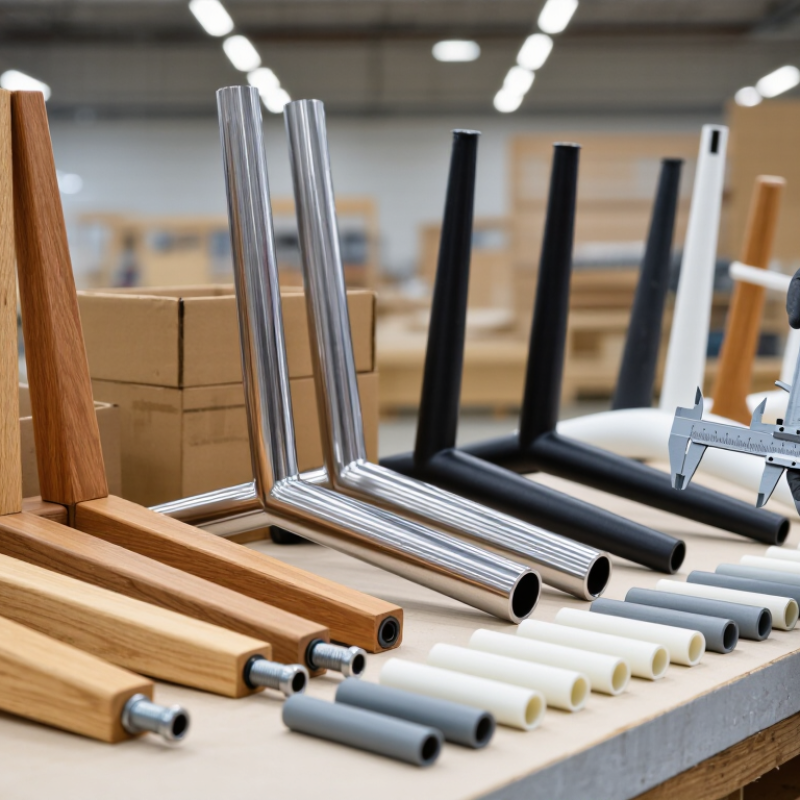
How to Evaluate Chair Leg Suppliers for Global Purchasing
Reliable chair leg sourcing starts with measurable specifications, not attractive catalog images. Ask suppliers to state material grade, tube thickness, leg height, mounting-hole spacing, and acceptable tolerances. A difference of two millimeters can create uneven chairs on a production line. Request samples from the same batch as mass production. Samples can hide weaknesses.
Testing deserves direct attention. Require load, fatigue, corrosion, and weld-strength reports when metal legs are involved. For wooden legs, check moisture content, grain direction, joint strength, and coating adhesion. An experienced purchasing team should review test methods, equipment calibration, and report dates. A certificate alone proves little.
Walk through the supplier’s process, remotely or in person. Inspect cutting, drilling, welding, polishing, packing, and final inspection records. Ask how rejected parts are separated. Ask again. Confirm monthly capacity, lead times, backup machinery, and packaging protection for long-distance shipping. Clear carton dimensions and weights also support accurate freight planning. Check whether the supplier can provide consistent replacement parts.
Price comparisons need caution. A low quotation may exclude tooling, protective packaging, testing, or export documents. Compare the complete landed cost instead. I once accepted a promising sample with a beautiful finish, but its plastic feet wore quickly on rough flooring. That mistake changed my checklist. Supplier evaluations should include independent inspections, written quality agreements, traceable batch numbers, and realistic payment milestones. No supplier is perfect. A transparent response to a defect often reveals more than a flawless presentation.
Top 10 Chair Legs Suppliers for Global Buyers
Global buyers now evaluate chair legs beyond appearance. Grand View Research estimates the global furniture market reached about USD 766 billion in 2023. Its report also projects continued growth through 2030. That expansion increases demand for stable, adaptable components. Supplier One specializes in solid wood legs with visible grain and moisture control. Supplier Two focuses on powder-coated steel legs for cafés and contract seating. Supplier Three offers aluminum legs with low weight and strong corrosion resistance. Supplier Four develops tapered legs for contemporary residential furniture.
Supplier Five provides adjustable legs for uneven floors and modular seating. Supplier Six produces stainless-steel legs for humid interiors and hospitality projects. Supplier Seven combines recycled plastics with injection molding for efficient volume production. Supplier Eight supports custom CNC machining, useful for unusual angles and concealed fittings. Supplier Nine supplies foldable legs for compact chairs and temporary venues. Supplier Ten concentrates on reinforced cast components for heavier commercial seating.
Material choice still needs evidence. The World Steel Association reported global crude steel production above 1.8 billion tonnes in 2023, supporting broad steel availability. However, availability does not guarantee quality. Buyers should request load tests, coating thickness records, salt-spray results, and batch traceability. ISO 7173 testing principles can help assess seating strength and durability. A polished sample may hide weak welds. I would inspect the second production batch, not only the showroom piece. Small errors matter. Some suppliers communicate well but document poorly, which remains a practical concern.
| Rank | Supplier Profile | Primary Supply Region | Main Materials | Core Product Range | Primary Product Strength | Common Surface Options | Typical Load Range | Customization Capability | Best-Fit Applications |
|---|---|---|---|---|---|---|---|---|---|
| 1 | Supplier Profile 01 | East Asia | Steel, stainless steel, aluminum | Tapered legs, sled bases, pedestal bases, mounting plates | Broad metal-leg portfolio with efficient production for large furniture programs | Powder coating Chrome plating Brushed metal | 100–250 kg per set | Tube diameter, height, mounting-hole pattern, color, and packaging | Dining chairs, office seating, hospitality furniture, contract projects |
| 2 | Supplier Profile 02 | Southeast Asia | Rubberwood, oak, ash, beech | Round wooden legs, tapered legs, turned legs, replacement legs | Strong solid-wood processing with practical options for residential furniture | Natural lacquer Stain Paint | 80–180 kg per set | Wood species, dimensions, turning profiles, stain color, and threaded inserts | Dining chairs, sofas, stools, cabinets, home renovation projects |
| 3 | Supplier Profile 03 | South Asia | Mild steel, stainless steel, cast iron | Hairpin legs, U-shaped frames, bench legs, welded chair bases | Cost-effective welded structures suited to modern and industrial furniture styles | Matte powder coat Black oxide Antique finish | 100–220 kg per set | Bar thickness, frame geometry, welding points, finish, and carton quantity | Industrial seating, café furniture, benches, side tables, DIY furniture |
| 4 | Supplier Profile 04 | Central Europe | Steel, aluminum, engineered polymers | Cantilever bases, swivel bases, stackable chair frames, chair feet | Engineering-focused seating components for commercial and institutional use | Fine-texture powder coat Anodized aluminum Protective caps | 120–300 kg per set | Ergonomic geometry, anti-slip feet, stackability, and project-specific dimensions | Training rooms, offices, public spaces, restaurants, education facilities |
| 5 | Supplier Profile 05 | North America | Steel, aluminum, solid hardwood | Replacement legs, furniture glides, adjustable legs, mounting hardware | Convenient replacement-component sourcing with emphasis on compatibility | Brushed steel Black coating Clear lacquer | 75–200 kg per set | Thread size, leg height, mounting plate, leveling mechanism, and retail packaging | Furniture repair, refurbishment, residential seating, maintenance programs |
| 6 | Supplier Profile 06 | Western Europe | Stainless steel, steel, aluminum | Outdoor chair legs, corrosion-resistant frames, pedestal bases, terrace furniture parts | Durable metal components designed for moisture and frequent-use environments | Marine-grade polish Outdoor powder coat Brushed finish | 100–250 kg per set | Corrosion-resistant grades, drainage details, tube profiles, and outdoor colors | Outdoor dining, cafés, hotels, terraces, leisure and garden furniture |
| 7 | Supplier Profile 07 | East Asia | Die-cast aluminum, steel, nylon, polypropylene | Office-chair bases, casters, gas-lift-compatible components, five-star bases | Integrated seating hardware for ergonomic and mobile office-chair systems | Polished aluminum Nylon molding Powder coating | 110–180 kg per base | Base diameter, caster interface, gas-lift opening, color, and mechanical fittings | Task chairs, executive chairs, conference seating, laboratory seating |
| 8 | Supplier Profile 08 | Eastern Europe | Beech, oak, ash, birch plywood | Bentwood legs, tapered legs, angular legs, chair-frame components | Value-oriented wooden components with traditional joinery and modern profiles | Water-based lacquer Stain Opaque paint | 80–170 kg per set | Leg angle, profile, drilling, wood grade, moisture requirements, and finish | Dining chairs, upholstered seating, Scandinavian-style furniture, custom workshops |
| 9 | Supplier Profile 09 | Southeast Asia | Aluminum, steel, rattan-compatible frames, synthetic wicker supports | Lightweight outdoor legs, tubular frames, folding bases, woven-chair supports | Lightweight construction for transport-efficient outdoor and leisure furniture | Outdoor powder coat Anodizing Textured coating | 80–180 kg per set | Foldability, tube size, frame shape, drainage details, and woven-furniture integration | Garden chairs, resort furniture, balconies, patios, leisure seating |
| 10 | Supplier Profile 10 | Global Multi-Region Supply | Steel, aluminum, wood, engineered plastic | Standard chair legs, universal brackets, adjustable feet, mixed-material components | Flexible sourcing for buyers requiring mixed materials and consolidated orders | Powder coating Plating Wood lacquer | 75–250 kg per set | Material combinations, dimensions, mounting systems, labeling, and export cartons | Furniture wholesalers, private-label programs, renovation, hospitality supply |
Global buyers often compare ten supplier types by material, design range, and production control. Metal specialists usually offer steel or aluminum legs with strong load performance. Wood manufacturers provide oak, beech, rubberwood, and engineered wood options. Plastic producers support lightweight furniture and high-volume orders. Some factories combine materials, such as steel frames with wood sleeves.
Design capability matters beyond appearance.
Common choices include tapered legs, splayed legs, hairpin forms, pedestal bases, and adjustable feet. Ask whether suppliers can produce custom heights, mounting plates, hole patterns, and surface finishes. CNC machining improves dimensional accuracy for wood components. Tube bending, robotic welding, powder coating, and plating support consistent metal production. Injection molding suits detailed plastic parts. Adjustable mechanisms need repeated-cycle testing.
Production evidence is more valuable than attractive catalog images.
Request samples, material specifications, load-test records, coating thickness, and packaging details. Experienced suppliers should explain tolerances, minimum order quantities, tooling costs, and realistic lead times. A pre-production sample can reveal loose threads, uneven welds, or unstable feet. It can also mislead. Mass production may vary when inspection is weak. Independent inspections and clear acceptance standards reduce this risk.
No supplier is perfect. Buyers should review factory capacity, worker safety practices, export experience, and replacement procedures before placing larger orders.
Top 10 Chair Legs Suppliers for Global Buyers
When comparing the top 10 chair legs suppliers, global buyers should examine quality standards, pricing, and minimum order requirements together. A polished sample proves little without reliable production control. Ask for material certificates, coating specifications, load testing, and dimensional tolerances. Steel legs should resist corrosion, while solid wood legs need stable moisture levels. Request inspection photos from packaging and final assembly. Small details matter.
Pricing often depends on material grade, finish, tube thickness, machining, and packaging. A low quotation may exclude molds, export cartons, or surface treatment. Minimum order quantities commonly range from 100 to 1,000 sets, depending on customization. Some suppliers accept smaller trial orders with higher unit prices. This can reduce risk, but shipping may become expensive. A few quotes are surprisingly vague. That deserves attention.
Tips: Send a clear technical drawing with dimensions, hole positions, color references, and allowable variation. Compare landed cost, not only factory price. Confirm sample fees, lead times, replacement policies, and payment stages in writing. Ask whether production records can be shared before shipment. In my experience, suppliers who explain defects honestly are often more dependable than those promising perfection. Still, one successful order is not enough evidence. Review consistency across several batches.
Indicative benchmark comparison of FOB unit pricing, minimum order quantities, and quality-compliance scores. Supplier identities are anonymized.
The benchmark reflects common export-market expectations for metal, wood, and plastic chair legs. Lower unit prices and MOQs may suit volume buyers, while higher compliance scores generally indicate stronger documentation, inspection procedures, and alignment with international quality requirements. Actual quotations vary by material, finish, tooling, packaging, order volume, and destination.
Global buyers comparing chair-leg suppliers should examine more than unit price. Shipping performance often decides whether a profitable order becomes a costly delay. Request recent lead-time records, container loading photos, and clear delivery terms. Ask how the supplier handles port congestion, damaged cartons, and production changes. Ocean shipments need moisture barriers, strong pallets, and accurate carton labels. Clear export documents matter.
Packaging deserves physical inspection. A reliable supplier uses corner protection, separated hardware bags, and cartons that survive stacking. Wood components need moisture control, while metal legs require rust-resistant treatment. Customization should begin with a controlled sample. Share drawings with exact dimensions, thread sizes, finishes, welding points, and weight requirements. Confirm whether the quoted price includes tooling and sample revisions. One overlooked dimension can make a beautiful leg unusable.
Supplier selection needs evidence, not polished promises. Ask for load-test reports, inspection procedures, material certificates, and references from similar projects. A video call can reveal production capacity, storage conditions, and communication habits. Some buyers focus too heavily on the lowest minimum order quantity. That can create inconsistent batches later. The cheapest quotation is rarely the safest choice. Still, expensive does not always mean reliable. A perfect supplier rarely exists; even experienced buyers can miss a small tolerance issue. Leave room for doubt, and test before scaling.
Common materials include solid wood, steel, aluminum, stainless steel, recycled plastic, and engineered wood. Each material suits different furniture needs. Wood adds visible grain. Metal usually offers stronger load performance. Material choice still needs testing.
Suppliers may offer tapered, splayed, hairpin, pedestal, adjustable, and foldable designs. Custom options can include height, mounting plates, hole patterns, and finishes. Concealed fittings are also possible. Appearance alone is not enough.
Request load-test records and dimensional tolerance data. Testing principles can help assess seating strength and durability. Adjustable parts need repeated-cycle testing. Inspect welds, threads, feet, and mounting holes. A polished sample may hide weak points.
Ask for material certificates, coating records, salt-spray results, and batch traceability. Request production photos before shipment. Packaging details matter too. Good paperwork reduces uncertainty, but it does not prove everything.
Pricing depends on material grade, tube thickness, machining, finish, packaging, and customization. Tooling and molds may cost extra. Surface treatment can also change the quote. Compare landed cost, not only factory price.
Customized orders commonly require 100 to 1,000 sets. Smaller trial orders may be available at higher unit prices. Shipping can become expensive for small quantities. The cheapest trial is not always the cheapest decision.
Review factory capacity, export experience, inspection systems, and replacement procedures. Compare several production batches, not just one sample. Ask how defects are recorded and corrected. Honest answers are useful. Perfection claims deserve caution.
Include dimensions, hole positions, mounting details, color references, and allowable variation. Also specify height and surface finish. Clear drawings reduce misunderstandings. Missing one measurement can create costly rework.
Stainless steel and corrosion-resistant aluminum can suit humid environments. Coating quality still matters. Request corrosion test results and coating thickness records. Do not assume shiny surfaces guarantee long-term performance.
Production may vary after the showroom sample is approved. Weak inspection can create uneven welds, loose threads, or unstable feet. Review multiple batches when possible. One successful order is limited evidence.
Choosing the right Chair Legs supplier is essential for global buyers seeking reliable quality, competitive pricing, and smooth international delivery. This guide explains how to assess suppliers by reviewing their material options, design range, production capacity, quality control systems, certifications, pricing structures, and minimum order requirements. It also highlights the differences between suppliers specializing in metal, wood, plastic, and customized chair leg solutions, helping buyers match product strengths with project needs.
The article further examines manufacturing capabilities, surface finishes, dimensional consistency, packaging standards, shipping arrangements, and customization services. Buyers will learn how to compare suppliers based on lead times, communication, production flexibility, and after-sales support rather than price alone. By evaluating samples, confirming technical specifications, clarifying order terms, and checking export experience, global purchasers can reduce supply risks and select a dependable partner for both standard and tailored Chair Legs projects.

Daxinghong Hardware