Choosing adjustable Cabinet Legs can change how a cabinet performs long after installation. They help compensate for uneven floors, common in kitchens, workshops, bathrooms, and retail spaces. Instead of forcing a rigid frame into position, installers can fine-tune each leg with controlled adjustments. A small turn may correct a visible tilt, protect door alignment, or improve the fit of a countertop. That practical flexibility saves time during fitting and later maintenance.
The best results begin with careful planning. Check the cabinet load, floor condition, leg material, adjustment range, and fixing method before purchasing. Steel legs may suit heavier furniture, while reinforced plastic options can work well in lighter applications. Always follow the manufacturer’s instructions and test the cabinet after installation. Stability matters more than appearance alone. It should not wobble.
From hands-on assembly experience, adjustable supports are especially useful when several cabinets must form one level run. However, they are not a cure for every structural problem. A weak cabinet base, loose fasteners, or excessive weight can still cause failure. That detail is easy to overlook. Reliable suppliers should provide clear load information, dimensions, installation guidance, and replacement support. Comparing these details helps you choose Cabinet Legs with confidence, rather than relying only on attractive finishes or low prices. A thoughtful choice creates cleaner lines, steadier furniture, and easier future adjustments.
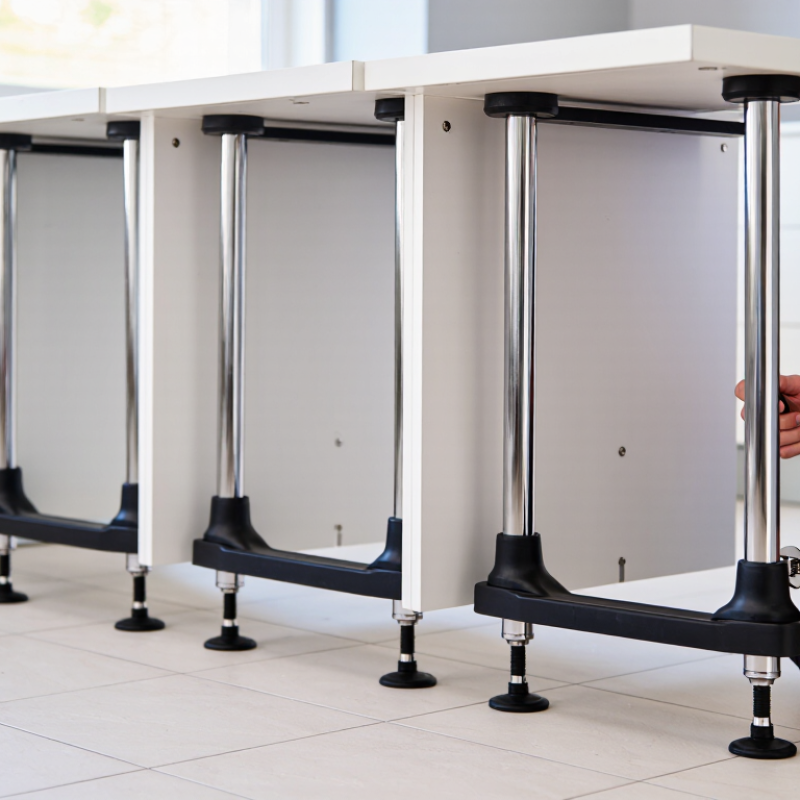
Adjustable cabinet legs are support fittings designed to lift, stabilize, and level cabinets. They usually combine a threaded stem with a rotating foot. Turn the foot, and the cabinet height changes slightly. This helps correct uneven floors, which are common in kitchens, utility rooms, and workshops. Some models also accept a removable plinth clip, allowing a clean base panel to hide the legs.
In practical installation, I place the cabinet in position before making final adjustments. A spirit level helps reveal small slopes from front to back and side to side. I adjust each leg gradually instead of forcing one corner upward. That reduces stress on the cabinet frame and keeps doors aligned. The selected legs should match the cabinet’s expected load, floor condition, and exposure to moisture. Plastic feet can suit dry interiors, while stronger materials may be better for heavier units.
Adjustable legs are useful, but they are not a cure for poor construction. I have seen overextended legs wobble under ordinary pressure. That mistake is easy to make. The cabinet must still have a rigid base and secure connections. After leveling, I press each corner gently and check for movement again. I also recheck the alignment after loading shelves, because weight can change the balance. My earlier measurements are not always perfect, so this second inspection matters.
Adjustable cabinet legs support cabinets while correcting uneven floors. They usually contain a threaded spindle, a fixed socket, and a rotating foot. Turning the foot raises or lowers the cabinet by moving the spindle through the socket. A locking nut then holds the chosen height in place.
During installation, I place the cabinet on all legs and adjust each corner gradually. A spirit level helps reveal whether the cabinet leans forward, backward, or sideways. Small turns can make a noticeable difference. That detail matters. The legs transfer weight toward the floor, while the cabinet body remains stable above them. Many systems also accept clips for attaching a removable plinth, so the supports stay hidden behind the finished panel.
Adjustment cannot repair a weak cabinet or replace proper wall anchoring. Check the stated load rating and distribute heavy contents carefully. On a tiled floor, dust or grout ridges may affect the final position, so I clean the contact points before leveling. I once corrected a cabinet by turning only one front leg, and the door alignment worsened. The better approach was to adjust opposite corners in small increments. It takes longer, but it reduces twisting and protects hinges. A level cabinet should also open smoothly, without scraping or unexpected movement.
Why Choose Adjustable Cabinet Legs for Your Project?
Adjustable cabinet legs offer practical benefits during real installation work. They compensate for uneven floors, which are common in older homes and renovation projects. A few millimeters can change an entire cabinet run. With threaded adjustment, installers can level the base without forcing panels into position. The result is cleaner door alignment, steadier countertops, and fewer visible gaps. Small adjustment. Big difference.
The National Association of Home Builders reported that 73% of remodelers identified aging housing stock as a major renovation opportunity in its 2023 Remodeling Market Survey. Older floors often have slopes, settled sections, or damaged surfaces. Adjustable legs help manage these conditions more efficiently than fixed supports. They also create a service space beneath the cabinet, allowing easier access for cleaning and plumbing inspection. However, they are not a substitute for careful measurement. Poor load distribution, weak fixing points, or unsuitable materials can still cause movement.
Harvard’s Joint Center for Housing Studies reported approximately 567 billion dollars in U.S. homeowner improvement spending during 2022. That scale reflects a strong need for durable, repair-friendly solutions. In my installation experience, adjustable legs are especially useful when cabinet height must match appliances or uneven walls. Yet the final choice should consider weight ratings, moisture exposure, and floor protection. A simple test with a level and temporary load can reveal problems before final installation. That's worth doing.
| Project Consideration | Adjustable Cabinet Legs | Fixed Cabinet Legs | Benefit for the Cabinet Project |
|---|---|---|---|
| Uneven Floors | Each leg can be set independently to compensate for minor floor height differences. | The cabinet may require shims, trimming, or repeated repositioning to achieve a level installation. |
Improved leveling Helps cabinet doors, drawers, and worktops align more accurately. |
| Height Adjustment | Many common cabinet-leg systems provide approximately 20–50 mm of adjustment, depending on the design and installation method. | The installed height is determined by the selected leg size and normally cannot be changed after installation. |
Flexible installation Makes it easier to meet a planned countertop height or align cabinets with adjacent units. |
| Installation Time | Leveling is performed by turning the adjustment mechanism, usually without dismantling the cabinet. | Corrections often require adding or removing shims, cutting supports, or moving the cabinet several times. |
Faster on-site fitting Reduces trial-and-error during installation, especially across multiple cabinet units. |
| Cabinet Alignment | Separate height adjustments help installers create a continuous, level line between neighboring cabinets. | Small floor variations can create visible height differences between adjoining cabinets. |
Cleaner finished appearance Supports consistent reveals and better alignment of doors, panels, and countertops. |
| Load Support | Suitable for many base-cabinet applications when the selected legs are correctly spaced and rated for the expected load. | Can also provide reliable support when installed on a level, structurally sound floor. |
Controlled load distribution Proper leg placement helps transfer cabinet, countertop, appliance, and stored-item loads to the floor. |
| Moisture and Cleaning | Legs can raise the cabinet base above the floor, and many systems accept removable plinths or toe-kick panels. | Performance depends on the leg material, cabinet clearance, and the floor’s exposure to water. |
Practical floor clearance Helps reduce direct contact between the cabinet body and occasional floor moisture while simplifying cleaning access. |
| Future Remodeling | The cabinet height can be fine-tuned if flooring is replaced or if adjacent surfaces change slightly. | Changes in floor thickness or room level may require new supports or additional shimming. |
Easier adaptation Provides more flexibility for renovations, replacement flooring, and later adjustments. |
| Installation on Hard Floors | Adjustment is useful on tile, concrete, stone, and other hard surfaces where cutting or fastening shims is inconvenient. | Installation can be straightforward when the surface is already flat and level. |
Less surface correction Reduces the need to modify finished flooring during cabinet installation. |
| Toe-Kick Integration | Many systems are designed to work with clip-on or removable toe-kick panels. | Toe-kick construction may require custom cutting or separate support details. |
Accessible finishing Removable panels can make inspection, cleaning, and service work more convenient. |
| Best Project Fit | Particularly useful for kitchens, utility rooms, commercial fit-outs, and projects with uncertain or uneven floor conditions. | Appropriate for lightweight units, decorative furniture, or installations on confirmed level floors. |
Better project control Adjustable legs are most valuable when installation accuracy, speed, and future flexibility matter. |
Note: Actual adjustment range, load capacity, materials, and fixing requirements vary by leg design. Always confirm the manufacturer’s technical specifications and distribute loads across an adequate number of properly secured legs.
Why Choose Adjustable Cabinet Legs for Your Project?
Adjustable cabinet legs solve a practical problem: floors are rarely perfectly level. They help installers align base cabinets without forcing panels into awkward positions. The right material depends on moisture, weight, cleaning routines, and visual expectations. Stainless steel suits kitchens, workshops, and laundry rooms where water exposure is common. It resists corrosion and supports repeated cleaning. Zinc-plated steel works well in dry indoor spaces and usually offers strong load capacity. However, damaged plating can expose the metal beneath.
Aluminum legs are lightweight and useful for movable cabinets or elevated storage units. They suit modern interiors with exposed metal details. Nylon and reinforced polymer legs fit lighter furniture, office storage, and areas needing quiet contact with the floor. They do not suit every heavy installation. I once underestimated the weight of stone-topped cabinetry. The legs remained stable, but the adjustment threads felt less convincing than expected.
Design matters as much as material. Threaded legs provide precise height changes during installation. Swivel feet follow slightly uneven floors more effectively than fixed pads. Wide bases spread pressure and reduce marks on vinyl or soft flooring. Locking nuts help prevent movement after alignment. Check the manufacturer’s load rating, adjustment range, and corrosion information before installation. A level, tape measure, and firm hand tightening are usually enough. Still, tightening too aggressively can damage plastic threads or cabinet panels. Test the assembled cabinet before loading shelves, especially when doors and drawers must align precisely.
Adjustable cabinet legs help compensate for uneven floors, simplify installation, and make future leveling easier. Stainless steel is well suited to kitchens, laboratories, and humid environments because of its corrosion resistance. Aluminum offers a lightweight option for modular furniture and wall-mounted units. Zinc alloy provides a rigid, decorative solution for indoor cabinetry, while nylon is useful where low weight, quiet operation, and moisture resistance are priorities. The chart shows representative material properties; exact performance varies by alloy, grade, wall thickness, and leg design.
Choosing adjustable cabinet legs begins with the cabinet’s real working conditions. Measure the cabinet height, width, and expected load, including shelves and stored items. Start with the floor. Uneven surfaces may require more adjustment range than expected. Check the manufacturer’s load rating, thread size, and material before purchasing. Steel suits heavier cabinets, while reinforced polymer can work well in dry, light-duty areas.
Installation should begin on a clean, stable base. Mark each leg position carefully, keeping the load balanced near corners and structural supports. Use suitable screws for the cabinet material, and avoid overtightening them. I once placed a leg too close to a thin panel, which caused slight cracking. That mistake reminded me to inspect the substrate, not only the measurements. Small errors matter.
Set the cabinet in position, then adjust each leg gradually. Use a spirit level across the front, sides, and diagonals. Measure twice. Lock the adjustment nuts after leveling, if the design includes them. Check that doors open freely and that the cabinet does not rock under gentle pressure. For tall units, connect the cabinet securely to the wall when appropriate. I still recheck the level after loading the shelves, because weight can reveal movement that an empty cabinet hides.
They are support fittings with threaded stems and rotating feet. Turning the foot changes cabinet height slightly. This helps level cabinets on uneven floors.
They correct small floor slopes without forcing cabinet panels into position. They can improve door alignment, countertop stability, and visible gaps. Small adjustment. Big difference.
Place the cabinet first, then check it with a spirit level. Adjust each leg gradually, from corner to corner. Avoid lifting one corner too aggressively.
They can, but only when their load rating matches the cabinet and contents. Heavy surfaces require stronger legs and secure fixing points. My earlier estimate may be wrong.
Corrosion-resistant metal suits kitchens, utility rooms, and laundry areas. Reinforced plastic can work in dry interiors. Water exposure should guide the material choice.
Threaded legs provide precise height changes. Swivel feet follow slight floor slopes more effectively than fixed pads. Wide bases help protect soft flooring.
Use locking nuts when available, then tighten them firmly by hand. Do not over-tighten plastic threads or cabinet panels. Check every corner again.
Yes. Shelves, dishes, or tools can change the balance. Press each corner gently and inspect the doors afterward. The second check matters.
No. They cannot repair a flexible base, loose joints, or poor load distribution. The cabinet still needs a rigid frame and secure connections.
A spirit level, tape measure, and firm hands are usually enough. A temporary load can reveal problems before final installation. Simple, but easily missed.
Adjustable cabinet legs are support components designed to raise cabinets off the floor while allowing their height and level to be fine-tuned. They typically use threaded shafts, locking nuts, or rotating bases so installers can correct uneven floors and create a stable, well-aligned cabinet layout. This flexibility is especially useful in kitchens, bathrooms, workshops, and other spaces where accurate positioning and reliable support are important.
The main benefits of adjustable Cabinet Legs include improved stability, easier installation, better moisture protection, and a cleaner appearance when combined with a suitable plinth or cover panel. Different projects may require plastic, metal, or reinforced composite materials, as well as concealed, exposed, round, or square designs. When selecting legs, consider cabinet weight, floor conditions, required height, load capacity, and the surrounding environment. During installation, measure carefully, distribute the supports evenly, adjust each leg gradually, and secure the cabinet before completing the final alignment.

Daxinghong Hardware